Red Light Therapy
A non-invasive modality used to reduce pain and accelerate tissue repair
What is Red Light Therapy?
Red Light Therapy is one of the therapy options available at Premier Physical Therapy.
Red light therapy, also called photobiomodulation, uses low-level red and near-infrared light, in the 600 to 850 nanometer range, to support the body's natural recovery. At Premier Physical Therapy in Arlington, TX, we offer red light therapy for muscle and joint pain. It may help reduce pain and inflammation, and it works best as one part of a plan that includes hands-on care and exercise.
How Red Light Therapy Works
Red and near-infrared light can pass through the skin into the tissue below. There, it's absorbed by the mitochondria, the part of each cell that produces energy. This is thought to help cells work more efficiently, which may ease pain and inflammation. The light is low-level, so it doesn't heat or damage the tissue.
Red Light vs. Laser Therapy
We offer both, and they're related. Both use light to support recovery. Low-level laser therapy uses a laser to deliver a focused beam to a specific spot. Red light therapy uses LEDs that cover a wider area. Eva will recommend the one that fits your condition, or a combination.
What a Session is Like
Red light therapy is painless. Most people feel nothing at all or a gentle warmth on the skin. You may be given protective glasses, because the light is very bright. There's no downtime, so you can go straight back to your day.
Conditions That May Benefit from Red Light Therapy
We use red light therapy as part of care for muscle and joint pain, including back pain, neck pain, shoulder pain, knee pain, arthritis and joint pain, sports injuries and chronic pain. It's often paired with myofascial release, the hands-on treatment at the center of how we treat.
A Comprehensive Therapy Approach
Your therapist can determine which treatment options fit your rehabilitation needs.
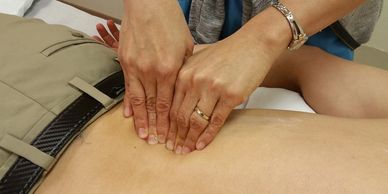
Myofascial Release
Myofascial Release is a hands-on technique that facilitates a stretch into restricted soft tissue by placing low-grade sustained pressure into a restricted tissue barrier.
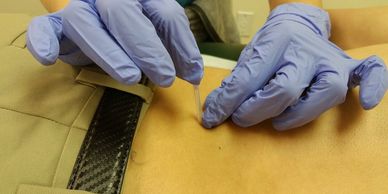
Dry Needling
Dry Needling is the use of either solid filiform needles or hollow-core hypodermic needles for therapy of muscle pain.
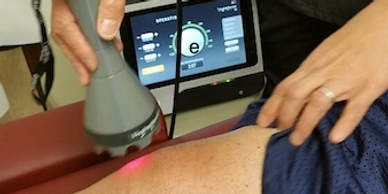
Cold Laser Therapy
Cold Laser is a painless technique using specific wavelengths of light to treat painful and debilitating conditions and speed recovery of damaged cells or tissues.